How to match the murals?
1. Oil material craft mural
Oily material originated and developed in Europe, and has become an important kind of painting in the world in modern times. In the 15th century, the nietland painters van Eyck brothers, on the basis of previous attempts to dissolve pigments with oil, used flaxseed oil and walnut oil as blending agents to make colors easy to blend, so they were widely used. Therefore, van Eyck brothers were called the creators of European oil painting.
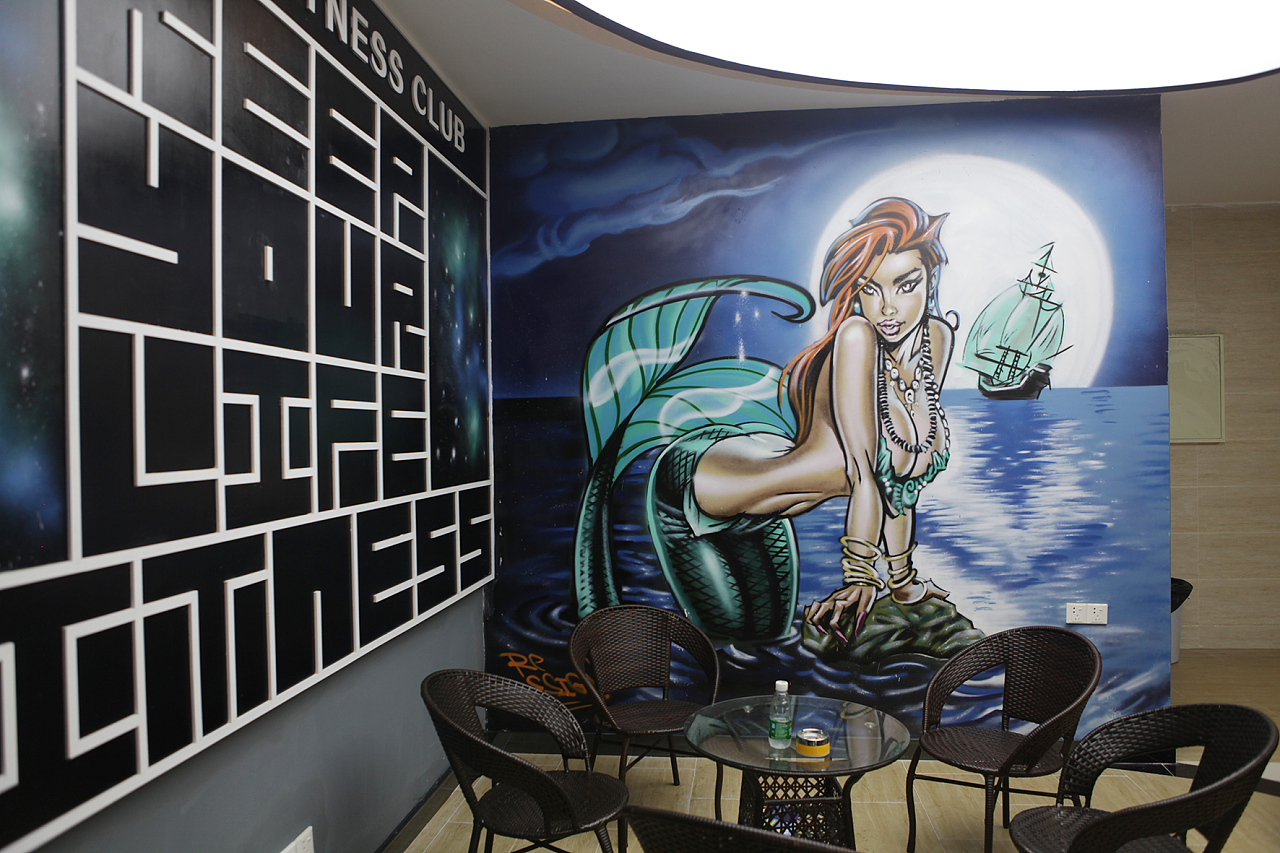
Oily materials are characterized by slow drying, glossy and repeated covering, thin flow, thick accumulation, strong plasticity, strong expressiveness and rich technical effects. The characteristics of oily materials allow in-depth and subtle depiction of the shape and color of the object, which can be laid layer by layer to fully show the rich and lifelike color relationship of the object, and can freely lay the grand scene. Modern and contemporary large-scale full (half) landscape Memorial murals mostly use oily materials.
2. Acrylic material mural Technology
Acrylic material is a kind of paint pigment made of chemical synthetic latex (including acrylate, methacrylate, acrylic acid, methacrylic acid, thickener, filler, etc.) and color particles. Acrylic pigment appeared in the 1950s. It has many advantages over other pigments, such as fast drying speed, strong wear resistance, moisture resistance, corrosion resistance, no discoloration, no cracking, no fading, no deterioration and shedding. Acrylic pigment is bright, soft, elegant and rich in texture.
Acrylic pigment has excellent performance and strong adhesion. It can be painted on cardboard, cloth, wood, fiberboard, cement wall, metal surface and stone wall with hemp texture. The acrylic pigment is a flexible film after drying, and its surface is Matt. There is no reflection of oil painting materials, which causes visual discomfort, so it is convenient for large-scale overall viewing. Modern painting murals are mostly made of acrylic materials, while most of the outdoor murals abroad use acrylic materials.
3. Ceramic murals
Ceramics are the oldest and most primitive artificial materials. In the history of ancient Chinese culture, ceramics are a kind of unique and important carrier. With solid texture and stable performance, they can be preserved for millions of years. The history of China's invention of pottery technology can be traced back to the black brown primitive pottery piece in Yuchan cave, Daoxian County, Hunan Province, 15000 years ago.
It has excellent quality, that is, compression resistance, corrosion resistance, wear resistance, cold and heat resistance, and has a strong plasticity. Among all the forms of murals, the most durable, easy to clean, bright colors and diverse expression techniques are ceramic murals, which are the preferred mural materials in humid environment. Beihai Jiulongbi relief ceramic murals in Beijing, China, are still bright after hundreds of years of weathering.
Ceramic frescoes are made of ceramic tiles, ceramic plates and other raw materials, using painting techniques and ceramic decorative art as a whole. Through a series of processes, such as lofting, drafting, depiction, glaze matching, glaze application, firing, and so on, the ceramic murals are produced by using various glazing techniques such as dip point, coating, spraying, filling and so on, as well as colorful kiln transformation technology.
4. Mosaic mural
Mosaic murals are made of different colored stones, glassware, ceramics, metals and other corrosion-resistant hard pieces by organic arrangement and combination. With the development of Western Christianity in the middle ages, the prosperity of mosaic murals appeared in the church. Its bright and colorful color dots and novel and unique technology appeared in the Christian church buildings at that time.
There are rich sources of inlay materials, such as natural colored stones, pebbles, shells, mother of pearl, precious stones, jade, artificial glass, ceramics, plexiglass, metal and wood. The mosaic murals have the advantages of firmness, moisture resistance, sunlight resistance and no color change. The texture and sense of measurement of hard pieces and the effect of form, color and light produced by the mosaic technology make the mosaic murals gorgeous and colorful in color, quality and quantity.