The pungency of pepper comes from capsaicin molecule, which can protect pepper fruit from fungal corrosion and rodent bite, and it does not prevent birds from spreading fruit seeds. But this leads to a new question: why aren't some peppers spicy, since they're so good? Let's follow and learn about it.
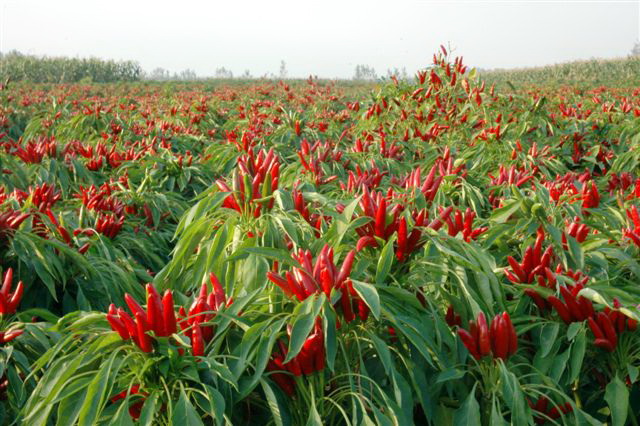
In a study published in the proceedings of the Royal Society B on December 21, 2011, researchers at the University of Washington gave us an answer. David Haak graduated from the University of Washington and is now a postdoctoral fellow at Indiana University. He studied Capsicum chacoense, a wild pepper growing in Bolivia. Huck and tucsbury, an ecologist at the University of Washington and colleagues, found that in the wettest places in their study area, only hot peppers grew. In the driest places, there are both, but only 15 {BF} to 20 {BF} plants produce spicy fruits.
The researchers collected hot and not spicy peppers from three of the study areas where precipitation and plant species had been measured. They plant seeds in the laboratory, simulating wet and dry conditions, giving plants enough and insufficient water, respectively. The researchers found that both spicy and spicy plants grow well when water is plentiful, and spicy plants produce as many seeds as non spicy plants. But because the Fusarium fungus, which likes humid environment in Bolivia, can attack pepper, non spicy plants are more vulnerable and difficult to survive. In conclusion, the hot zone of Bolivia is the dominant reason.
But when plants grow in a dry environment, the seeds of pungent plants are only half of those of non spicy plants. This is due to the fact that water is discharged from the plant through tiny stomata in leaves and stems. During the day, plants release oxygen and absorb carbon dioxide through their stomata, but this gas exchange leads to the loss of water. Because the stomatal density on gas leaves directly affects water loss, the team compared the stomatal density of 30 hot and non spicy peppers of similar age and height.
They found that the stomatal density of pungent plants was 40 {BF} higher than that of non spicy plants. After crossing the two types of plants, the team found that the stomatal density of the hot Hybrid Pepper was still higher than that of the non spicy Hybrid Pepper. Because spicy plants lose more water, they don't have many seeds. In a dry environment, the fungus Fusarium is no longer a big problem for hot peppers. Because it can retain more water and produce more seeds, these plants can thrive in a dry environment and surpass their pepper counterparts.
pharmacological action
Effect on digestive system
Capsicum tincture or capsaicin can be taken orally as a stomach tonic, which can promote appetite and improve digestion. Animal experiments (Basov stomach flaccidity dog) proved that the stimulation of hot pepper water on oral mucosa, reflexively enhanced the gastric movement. The condiments made from various kinds of pepper can increase salivary secretion and amylase activity after oral administration. Large doses of oral administration can produce gastritis, enteritis, diarrhea, vomiting and so on. It has been reported that capsicum has inhibitory and antispasmodic effects on isolated animal intestines.
Antibacterial and insecticidal effects
Capsaicin had significant inhibitory effect on Bacillus cereus and Bacillus subtilis, but had no effect on Staphylococcus aureus and Escherichia coli. Its branches and leaves have no antibacterial effect, only slightly inhibit Mycobacterium tuberculosis. 10-20% Pepper Fried Vitex has the effect of killing bedbugs.
Redness
External use as a smear on the skin has a Su Su effect, make skin local blood vessels reflexively expand, promote local blood circulation exuberant. Tincture can be used for chilblain; however, some people think that pepper only strongly stimulates sensory nerve endings, causing a sense of warmth, but has little effect on blood vessels. High concentration does not foaming, so it can not be regarded as a reddening agent.
Effect on circulation system
Pungent substances (ginger, pepper, especially pepper) can stimulate the taste receptors of human tongue, reflexively cause blood pressure rise (especially diastolic blood pressure), but have no obvious effect on pulse. Intravenous injection of capsaicin or capsaicin can cause transient hypotension, bradycardia and dyspnea in anesthetized cats and dogs, which are caused by stimulation of chemoreceptors or stretch receptors in lung and coronary artery regions. On the other hand, it has direct excitatory effect on isolated guinea pig atrium and contractile effect on blood vessels of hind limbs of rats.
matters needing attention
Although capsicum is rich in nutrition and has important medicinal value, it is harmful to human health to eat too much. Because too much capsaicin can stimulate gastrointestinal mucosa, make it hyperemia, peristalsis speed up, cause stomachache, abdominal pain, diarrhea and anal burning pain, induce gastrointestinal diseases, promote hemorrhoids bleeding. Therefore, all patients with esophagitis, gastroenteritis, gastric ulcer and hemorrhoids should eat less or avoid eating pepper.
Methods to relieve pungency:
When you eat chili, you feel hot and naturally want to drink water or eat some staple food to dilute the spicy taste. In fact, the effect of this will not be ideal. In fact, capsaicin binds tightly to nerve receptors in the taste organs, and capsaicin is an insoluble substance that can only bind to fat, oil and alcohol. It's not hard to explain why beer tends to dilute the spicy taste more easily than water. In fact, the quickest way to make peppers less spicy is to add a little vinegar to it, and you can also reduce the heat.
But the best food to ease the spicy taste is milk, especially skimmed milk. Although it was previously thought that lipids in milk can bind capsaicin better, studies have found that the real effective ingredient is casein in.