1. Rearing of juvenile turtles
The newly hatched juveniles are delicate and not suitable to go directly into the pool. They can crawl freely on the fine sand first. After the umbilical cord is dried and converged, and the body changes from curly to straight, they are put into indoor pots and dishes for temporary cultivation. In the first two days, the juveniles do not need to take in external nutrition because the yolk has not been fully absorbed. Two days later, they began to feed water flea, earthworm and cooked egg yolk, several times a day, each time to eat saturated, the next time there is no surplus, after two days began to feed minced fish, shrimp, snails, mussels and mixed with a small amount of rice, wheat flour and other mixed feed. Change water every day and keep the basin clean.
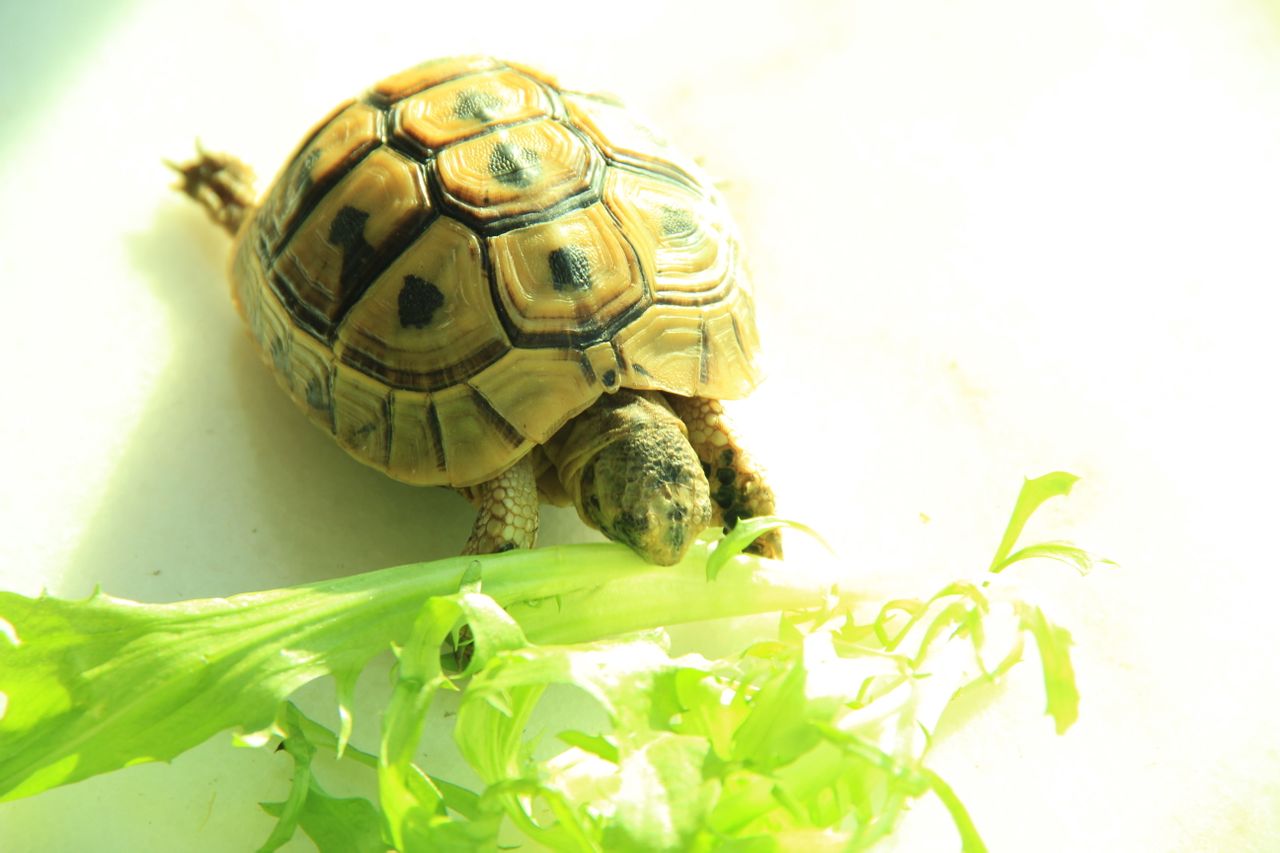
After a few days of indoor temporary rearing, they can be transferred to the juvenile turtle pond. Disinfect with medicine before entering the pool. The stocking density should not exceed 80 per square meter. Feed requirements of fine, fine, soft, fresh, mainly animal fish, shrimp, snails, mussels, livestock and poultry viscera, supplemented by plant melons, vegetables and wheat bran. The best condition is to feed artificial compound feed with protein content of about 40%.
The water depth of juvenile turtle pond is generally 20-30cm. In order to prevent disease, the pond water or juvenile turtle should be disinfected regularly with medicine.
After entering October, when the water temperature drops to 15 ℃, those with warming conditions should be transferred to greenhouse culture in time. If there is no heating equipment, winter measures should be taken, such as the outdoor pool film covering insulation method: first put sand in the pool, water, so that the sediment is wet, the mud can be kneaded by hand, without water, and the juvenile turtle can occupy the sediment. There is no need to feed during the winter, but when the sediment is too dry, appropriate watering should be carried out to maintain the necessary humidity. When the temperature is too low, straw can be covered on the sediment for heat preservation.
2. Rearing of young turtles
At present, most of the young turtles are raised by heating. When the water temperature drops to 15 ℃ in October every year, about 15 grams of turtles will be transferred to the indoor breeding mouth. The heating method can be hot spring water, factory residual hot water or boiler heating. The water temperature should be controlled between 28 ℃ and 30 ℃. The size, shape and heating equipment of the pond can refer to the turtle heating equipment, but more rest tables should be set.
The stocking density of young turtles is about 30 per square meter. The protein content should be about 40%, and the daily feeding amount should be about 3% - 5%. Feed should be often mixed with some melon, leafy vegetables, and crushed or squeezed into juice, at the same time, should also regularly add some oral medicine to prevent disease, daily 8 ~ 9 am, 4 ~ 5 pm, each feed once, each time to eat enough and no residue.
The water should be changed every three to five days when the turtle is heated. Before injecting new water, the residual bait at the bottom of the pond should be removed to keep the water clean. The temperature difference between the input water and the discharged water is generally less than 3 ℃, and the water exchange volume is 1 / 3 of the total water body. If the whole pool changes water, the bottom of the pool should be washed and dried, and the whole pool should be sprinkled with quicklime water every week and regularly disinfected with drugs, so as to improve the water quality, sterilize and prevent diseases.
After overwintering or in the spring of the following year, the juveniles enter the feeding stage. Juvenile turtle breeding refers to the breeding of juvenile turtles from the first overwintering to the second overwintering, including the breeding of 2-year-old and 3-year-old turtles. In the first ten days of April every year, when the water temperature reaches about 15 degrees, the young turtles begin to feed. The young turtles should be raised according to different specifications, and the juveniles with the same size should be fed in the same pool, so as to avoid the predatory prey of the weak and the polarization, and inhibit the feeding and growth of the smaller turtles. Generally, 20-30 2-year-old turtles and 10-20 3-year-old turtles are kept per square meter.
3. Feed and feeding
From the source of turtle feed, turtle feed has three categories. Animal feed includes fish, shrimp, snail lion, mussel, earthworm, fly maggot, silkworm pupa, insects and viscera of various animals; plant feed includes melon skin, sweet potato, wheat grain, rice, tender leaves, duckweed, corn, bean cake, etc.; artificial compound feed is prepared according to the operation and growth needs of young turtles, and the general crude protein requirements are 30% - 40%. The type of feed should be different according to the local resources. In areas where animal feed sources are extensive, animal feed and plant feed can be mixed in 7:3. In areas where animal feed sources are difficult, compound feed can be fed. It is not affected by natural conditions and is easy to be preserved and fed. Feed should be fresh and palatable.
It is not allowed to feed rotten feed. Smaller feed such as earthworm, shrimp, fish, fly maggot, silkworm pupa, etc. can be directly put on the food table about 2 cm away from the water; larger feed such as animal viscera, mussel meat, fish, etc. can be chopped and fed. The formulated feed should be mixed wet and kneaded to make it soft and viscoelastic before feeding. Plant feed can be directly fed, or it can also be ground, hatched or squeezed into juice and mixed into animal feed or compound feed. They were fed twice a day in the suitable temperature season, from 8:00 a.m. to 9:00 p.m., and from 4:00 p.m. to 5:00 p.m., the amount of feed was 10% - 15% (fresh weight) of the total weight of the young turtles, and the compound feed was 2% - 5%. In the non suitable temperature season (non feeding season), the feeding amount was half of that in the suitable temperature season.
4. Feeding management
The pool water should be yellow green, with a transparency of 25-35 cm. Because the pond is small, the water quality is easy to deteriorate, especially in summer, the turtle eat a lot of food and excreta, which is easy to cause water pollution. Therefore, every 10 days or so, 1 / 3 of the low layer water should be drained and fresh water should be added to ensure fresh water quality. In addition, 15 kg of quicklime slurry is sprinkled in the whole tank every 2O days according to the water depth of 1 m per mu to improve the water quality. In the high temperature season, it is necessary to build a canopy above the outdoor pool for shade.
Do a good job in the prevention of fleeing and enemy (rats, snakes, etc.) work. Keep the environment quiet, especially within 1 hour after feeding. Remove the bait every day. If there is no temperature control, when the water temperature drops to about 20 ℃, make preparations before overwintering; feed as much as possible some feeds with high protein and fat content, such as animal viscera, earthworm, silkworm pupa, snail, fish, shrimp, etc.; keep the pool water above 0.9 meters, set up a shelf on the pool, lay plastic film or straw for heat preservation. The angle between the tile and the horizontal plane is 25-30 degrees to connect the spawning ground with the parent turtle pond, and the slope of the dike is required to be 25-30 degrees when the spawning ground is built on one side of the pond.