Usually, in order to make the flowers grow better, many flower friends will go to the garden store to buy some green manure or fertilizer home. In fact, Huahua feels that this money can be saved to buy some exotic flowers and plants to decorate the balcony, or to buy some gardening tools to save time for her gardening. Let's have a look.
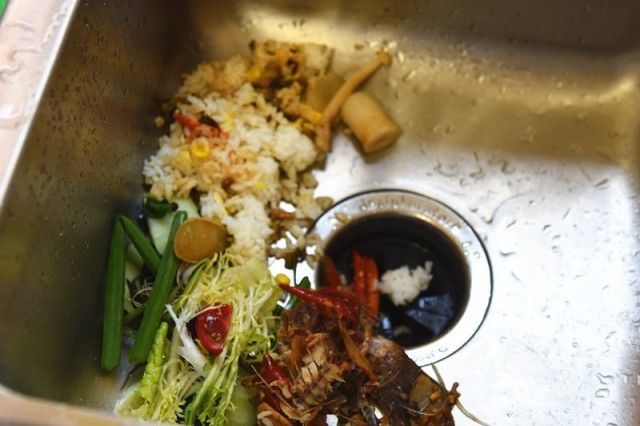
Why? It is very simple for us to make the flower fertilizer by ourselves, and it can also turn all kinds of "garbage" into treasure. For example, when we usually cook, we choose to throw away the leftover leaves or stems, but in fact, these things are a good raw material for making flower fertilizer.
Today, I will explain this basic step for you. It is very simple
1, first of all, we have to prepare a plastic foam box, we usually buy seafood or buy vegetables will be accompanied by one, at this time we do not throw away, save it, it does not have great use.
2, look for some common garden soil, then lay it on the bottom of the foam box, and spread it about 3 centimeters. Take out all kinds of vegetable leaves and fruit peels that we collected and stored, and also spread a thin layer on the first layer of soil.
Remember, when you spread the vegetables leaves, you must spread them evenly. You can't have more here than there. In this way, the later fermentation will be uneven and the fermentation result will not be so perfect.
3. After the vegetable leaves are paved, we can spread a thin layer of soil on it, about two centimeters thick.
4, and then we lay a layer of vegetable leaves on the top, and move to and fro until the 4/5 height exceeds the depth of the plastic foam box.
5. Finally, the top of this layer of soil as thick as possible, flowers suggest about 3 cm to 4 cm thick.
6. After all the steps of spreading soil and vegetable leaves are completed, the pot soil is poured through with the water spray pot at home, so that the vegetable leaves can be integrated with the soil more quickly.
7, find a plastic film bag, or directly use fresh-keeping film, sealing the opening of the foam box, pay attention to the strict sealing, after the plastic wrap is sealed, use toothpicks to stab a few small holes on the top, which is conducive to the emission of gas.
8. Put this box in the place where the sun is strongest and hottest. If you have an outdoor balcony, put it on the balcony where you can get the most sunshine, and there should be no other shelter to block the sun. In this way, we can use the flower fertilizer as soon as possible~
9. Open the plastic film for a week, stir the mixture inside, mix the leaves and soil evenly, and the fermentation will be faster.
But Huahua should remind you that if you want to open the plastic film, you must remember to put on a mask first, because its smell may make you feel very uncomfortable.
Because the weather is still very hot now, so it can be used in less than a month.
When we use it, we can't plant flowers directly with this kind of soil, because it's more fertile, or the fermentation process has not been completely finished, so we can use this soil to spread about 5cm on the bottom of the pot when changing pots, so as to provide sufficient fertility for our flowers and plants.
Have you ever done this kind of vegetable leaf compost? If you have some extra leaves and peels at home, you can have a try.
Three methods of disposing nutrient soil
1. Self made sapropelic soil
In autumn, leaves, pine needles and weeds are collected for fermentation. During fermentation, first put a layer of leaves, then put a layer of garden soil. After putting several layers in this way, then water a small amount of sewage, and finally cover the top with a layer of garden soil about 10 cm thick. In spring and summer, they should be opened, turned, smashed, and then stacked. It is excavated in late autumn and further crushed and screened.
Do not press too tightly, in order to facilitate air penetration, create conditions for aerobic bacteria activity, so as to accelerate the decomposition of the accumulation. Do not make the deposit too wet. If it is too wet, the ventilation is not good. Under anoxic condition, the aerophilic bacteria propagate and move in large quantities, causing serious loss of nutrients and affecting the quality of rotten leaf soil.
2. Vegetable leaf fertilizer with peel
Prepare several pots. First, lay a layer of soil one inch thick. Put the peels of the broken vegetable leaves and then spread another layer of soil. Do this repeatedly until the pots are full (to ensure that the last layer must be soil). Get some water and wait for it to ferment. Mix it when you use it.
Cover the peels with soil to avoid mosquitoes, insects or bad taste.
3. Kitchen waste can fatten the soil
Choose an impermeable container, put a layer of soil to add insecticides, and then sprinkle a layer of soil, put kitchen garbage and pour rice water into it. Sealed fermentation.